You may have heard that most windows last about 20 years. This is a common answer homeowners find when researching window lifespan by material. However, in North Carolina and South Carolina, averages often don’t tell the whole story.
Heat, humidity, seasonal storms and long summers all affect how long windows actually perform. If you’re dealing with foggy glass, drafts or rotting frames, the real question isn’t just how long windows last – it’s why they fail.
In this guide, we’ll explain how long popular window materials typically last, what factors affect performance in the Carolinas’ climate and how to confidently choose a replacement that offers long-term durability and peace of mind.
Window lifespan isn’t a fixed expiration date. It’s influenced by three key factors – material quality, installation and climate exposure.
In areas with constant humidity and heat, national averages can be misleading. Two windows made from the same material may perform very differently based on how they’re built and installed.
When people discuss window lifespan, they usually mean one of two things – structural or functional lifespan.
Structural lifespan describes how long the frame retains its physical integrity. Functional lifespan refers to how long the window seals properly and maintains efficiency.
Most homeowners replace windows because of functional decline, well before structural issues arise. Common signs include fogging, drafts, difficulty opening or closing and rising energy bills.
In the Carolinas, high humidity can be harmful to organic materials, such as wood. Vinyl expands and contracts with temperature changes, and prolonged exposure to heat can weaken lower-quality vinyl.
In coastal areas like Charleston and Hilton Head, wind-driven rain and storms test both structural strength and installation quality. These environmental factors accelerate wear in ways that generic lifespan charts often overlook.
The ranges below reflect general industry estimates. Actual window lifespan depends on material quality, maintenance, climate exposure and installation quality.
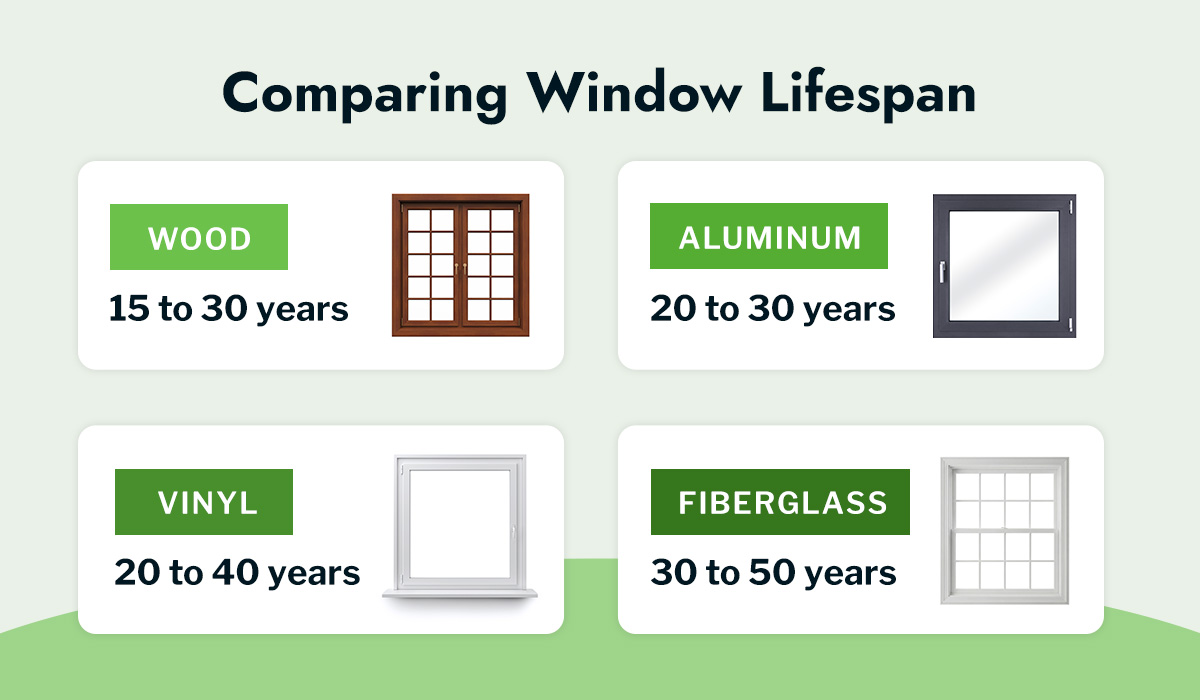
Vinyl windows generally last between 20 and 40 years. High-quality vinyl with proper UV stabilizers can last for decades.
However, vinyl is a thermoplastic material. In hot climates, repeated expansion cycles may weaken seals and affect alignment over time. Lower-quality vinyl can fade, chalk or become brittle with prolonged exposure to UV light.
While maintenance is minimal, climate stress can shorten the practical lifespan of some vinyl windows.
Even in humid climates like the Carolinas, wood windows can last 15 to 30 years or longer with consistent maintenance.
The challenge is upkeep. Wood absorbs moisture from humid air, which can lead to swelling, peeling finishes and eventual rot if protective coatings fail. Achieving long-term performance requires ongoing scraping, sealing and repainting. When maintenance slips, performance can decline faster than expected.
Fiberglass and composite windows often last 30 to 50 years or more. These materials are designed for stability. They resist moisture absorption and generally expand and contract at rates similar to glass. This stability reduces stress on seals and supports a longer functional lifespan in hot and humid climates.
Because of their structural stability and moisture resistance, fiberglass and composite windows are good choices for long-term performance.
Aluminum windows typically last 20 to 30 years, depending on coating quality and environmental exposure.
They don’t rot, but aluminum conducts heat well. Proper thermal breaks help reduce conduction and improve condensation resistance. In coastal areas, salt air can also lead to surface corrosion over time.
While aluminum windows are structurally durable, they may not provide the same thermal performance as other materials designed with insulation in mind.
Windows rarely fail suddenly. Instead, they break down slowly under environmental stress. Understanding the physics behind this stress reveals why some materials last longer than others.
All materials expand when heated and contract when cooled. The trouble arises when the frame and the glass expand at different rates. Over time, this movement strains the seal between them.
When seals weaken, homeowners may notice:
Repeated expansion cycles in hot climates speed up this process.
Humidity puts continuous pressure on organic materials. Small gaps in installation can allow water to seep behind the frame, where damage may go unnoticed until significant deterioration occurs.
Moisture-related stress may result in:
In humid regions, this process often goes faster than in drier climates.
The southern sun exposes windows to constant ultraviolet radiation. Over time, UV exposure can weaken materials and protective finishes.
Prolonged UV exposure may cause:
Understanding these failure mechanisms helps clarify why lifespan varies so much between products – even within the same material type.
Even a well-made window can underperform if installed incorrectly. Installation quality directly affects long-term performance.
Installation shortcuts can cause problems that arise years later.
Improper installation can lead to:
Many so-called “window failures” are due to installation issues rather than material defects.
When windows are installed correctly, stress on the frame and sash is reduced. Proper integration into the home’s structure helps prevent moisture intrusion and air leaks over time.
Installation affects performance from day one and influences how long that performance lasts.
Renewal by Andersen® treats replacement as a complete system designed for long-term success in tough climates.
Renewal by Andersen® windows are made with our unique Fibrex® composite material.
Fibrex® combines the strength of wood with the low-maintenance qualities of vinyl. It is twice as strong as vinyl and built to resist warping and rot. It also expands and contracts at a rate similar to glass, reducing stress on seals during temperature changes.
Unlike regular wood, it won’t rot or take in moisture. Compared to some vinyl types, it won’t warp in high heat. The result is a frame designed for stability and exceptional energy efficiency.
Renewal by Andersen® uses a complete, start-to-finish service called Signature Service. From the first consultation to the final installation, one company handles the whole process.
Signature Service includes:
This integrated approach ensures consistent performance without confusion between manufacturers and installers.
Window lifespan is more than a number. It’s about engineering, climate resistance and professional installation working together. Renewal by Andersen® backs its windows with strong warranty coverage on glass, Fibrex® material, hardware and installation. A solid warranty reflects confidence in both engineering and craftsmanship.
In the Carolinas, where humidity, heat and storms place constant stress on materials, choosing a replacement solution designed for long-term performance is essential. Instead of simply replacing what has failed, think about upgrading to a system built for durability.
If you’re ready to explore windows designed for lasting performance and peace of mind, schedule your free consultation with Renewal by Andersen® today. Our team will help you move forward with confidence.